Many homeowners choose solar installation in Sydney expecting to see a noticeable drop in their power bills. When that reduction does not materialise, it can be confusing and frustrating. At Platinum Solar Group, we regularly see the same underlying issues when solar systems fail to deliver the level of savings people anticipated.
System design that does not match the household’s usage pattern, unrealistic bill reduction expectations, poorly configured or lower-quality equipment and a lack of ongoing monitoring can all erode the financial benefits of going solar. In some cases, the problem is not the panels themselves but the tariff structure or the way electricity is being used within the home.
Platinum Solar Group technicians regularly assess systems that appear to be “underperforming” and often find that the issue lies in system sizing, placement, usage timing or retailer settings rather than the hardware alone. This article explores five of the most common reasons solar panels may not be saving as much money as expected and what that means for real-world bills. By understanding how system size, configuration, feed-in tariffs, usage habits and maintenance all interact, homeowners can separate genuine performance problems from simple misunderstandings and make informed decisions about improving their existing system or planning a more effective one in the future.
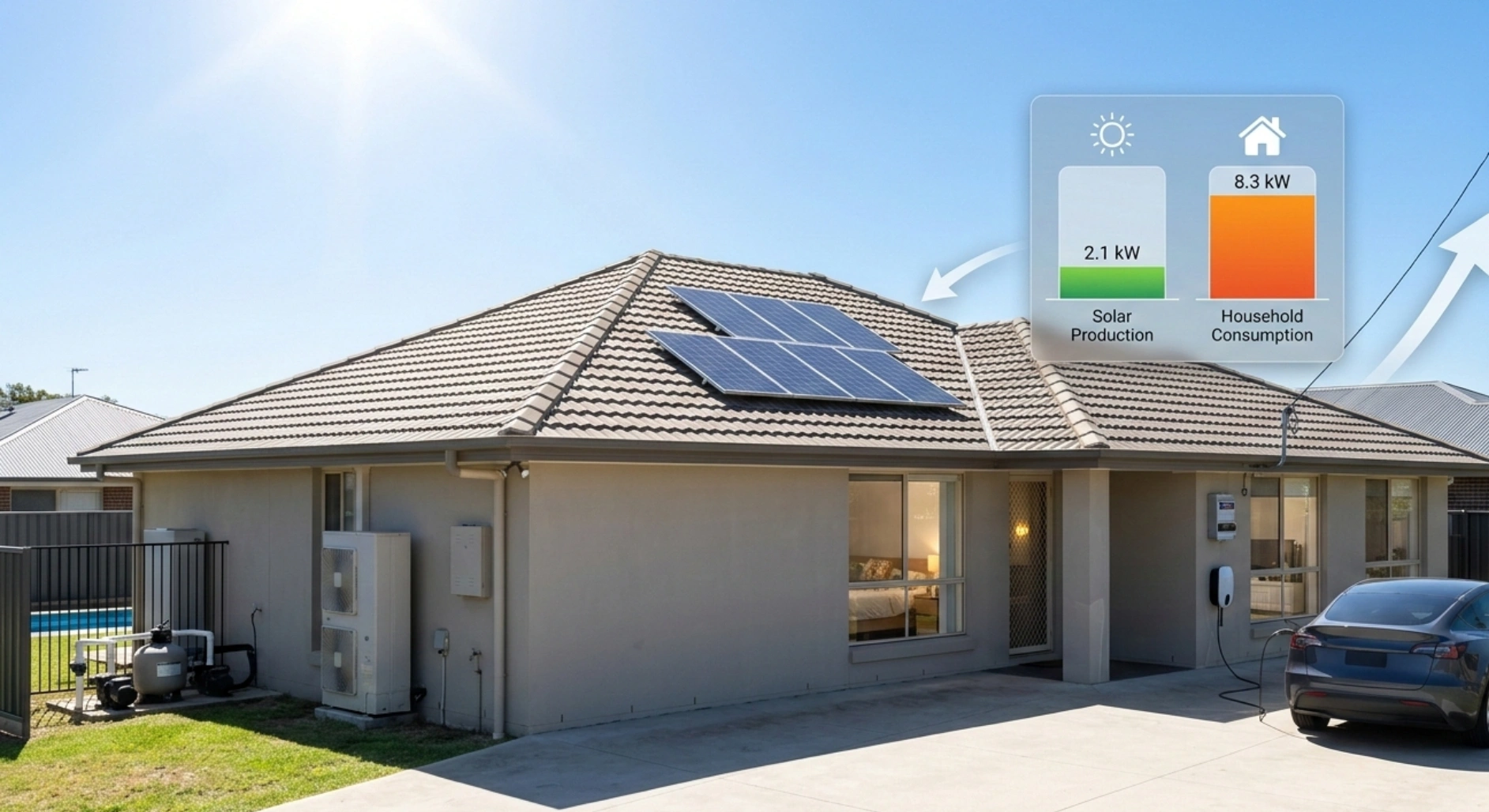
One of the most common reasons solar panels do not deliver the expected savings is that the system is simply the wrong size for the way the household or business actually uses electricity. A system can be technically well installed and still underperform financially if it is too small, too large or mismatched to the timing of power use.
Experts often find that systems were designed using guesswork or just roof space rather than real usage patterns. Correct sizing starts with a detailed look at when and how much power is used across the day and across the seasons, then matching the solar design to that profile.
If the system is too small, the property still draws a lot of power from the grid during the day. This is especially common in homes with:
For example, if a home consistently uses 25 kWh per day but the system only produces 12 to 15 kWh on a typical day, a large portion of consumption still comes from the grid at full retail rates. The homeowner might see a modest bill reduction, but nowhere near what a properly sized system could provide.
Undersizing is often the result of only looking at average daily usage on one bill or picking a system size that fits a budget rather than the load. Proper design should review at least 12 months of bills to account for high use in summer or winter and should consider any planned changes, such as adding air conditioning, EV charging or a new home office.
At the other end of the scale, an oversized system can also deliver poor savings. If solar generation regularly exceeds on-site usage during the day, the excess is exported to the grid at a low feed-in tariff. With feed-in rates in many areas sitting well below the retail price of electricity, every exported kWh is worth far less than a kWh used on site.
A common sign of oversizing is very high daytime exports on the electricity bill, combined with bill savings that do not match the size of the system investment. This can happen when a system was sized only on the roof area or when usage has dropped since installation. For example, children moving out or gas replacing electric appliances.
Correct design aims to maximise self-consumption of solar energy, not just total generation. That usually means sizing the system so a large portion of production is used as it is generated, with exports kept to a sensible level.
Even if the total annual generation seems right, the system may not be matched to the daily usage pattern. For instance, a household that uses most of its power in the evening will see limited benefit from a system designed without considering battery storage or load shifting.
Professionals typically recommend:
By sizing the system around real load profiles and usage habits instead of averages or guesswork, homeowners give themselves the best chance of strong long-term savings.
Even with a quality solar system on the roof, many households are disappointed when the power bill barely shifts. A common reason is simple timing. If most electricity use happens early in the morning or at night, the home is drawing from the grid when the solar panels are not producing much or any power.
Solar delivers the best bill savings when a household uses a lot of power during the middle of the day. If that is not how the home currently operates, then even a well-designed system will not deliver the savings the owner expected until usage habits or system setup are adjusted.
Solar panels only generate meaningful power during daylight and production peaks around the middle of the day on clear days. In the early morning, late afternoon and at night, the home relies on grid electricity unless there is a battery in place.
If a family is out at work and school from 8 am to 5 pm, weekday usage is usually concentrated:
That pattern means the solar system is exporting a lot of unused energy to the grid during the day at a relatively low feed-in tariff while the household is buying power in the evening at a much higher retail rate. The result is modest bill reductions, even though the panels are performing correctly.
Many of the biggest energy users often run when the sun is low or down. Common examples include evening:
If these loads are not shifted into solar hours, the system is largely helping with smaller daytime background loads, such as fridges and standby power, limiting the savings potential.
Adjust how and when certain appliances are used so more of the solar power is consumed on-site rather than exported. Practical options include:
If lifestyle or work patterns make daytime use difficult, pairing the system with a correctly sized battery can store excess solar for evening use. Some combination of usage shifting, smart controls and storage is needed before the solar system can deliver the bill savings the owner expected.
Many homeowners are surprised when their electricity bills hardly change after going solar. A common reason is that the feed-in tariff they receive for exporting power to the grid is much lower than the rate they pay to buy power from their retailer. If most of their solar production is being exported instead of used in the home, the bill savings will be far less than expected.
Technicians help customers understand that modern solar is no longer about getting paid generously for every exported kilowatt hour. Real savings now come from using as much of their own solar energy on site as possible and treating the feed-in tariff as a small bonus rather than the main benefit.
A feed-in tariff is the credit the energy retailer pays for each kilowatt hour of solar sent to the grid. Retail usage rates are usually two to three times higher than typical feed-in tariffs. This gap is the core problem.
For example, a household might:
If that home uses a kilowatt hour of its own solar, it effectively avoids paying 30 cents. If it exports that same kilowatt hour instead, it only earns 6 to 10 cents. Over a year, that difference can be thousands of kilowatt hours, so the lost value adds up quickly.
Many people sized their system expecting to “sell lots of power back to the grid” based on older, higher feed-in tariffs. With current lower rates, that strategy no longer delivers the fast bill reductions they hoped for.
Low feed-in tariffs are most painful when a system is oversized for the household’s daytime use or when usage patterns do not match solar output.
Common situations include:
Most of the solar generation is sold to the grid for a minimal credit. The customer still paid full price for the system but is getting the lowest possible value from it. A slightly smaller but better-matched system would have delivered similar or better savings at a lower upfront cost.
With current tariff settings, the goal should be to maximise self-consumption, not exports. Homeowners can improve savings by:
By focusing on using their own solar instead of depending on low feed-in tariffs, customers are far more likely to see the bill reductions they expected when they first chose to go solar.
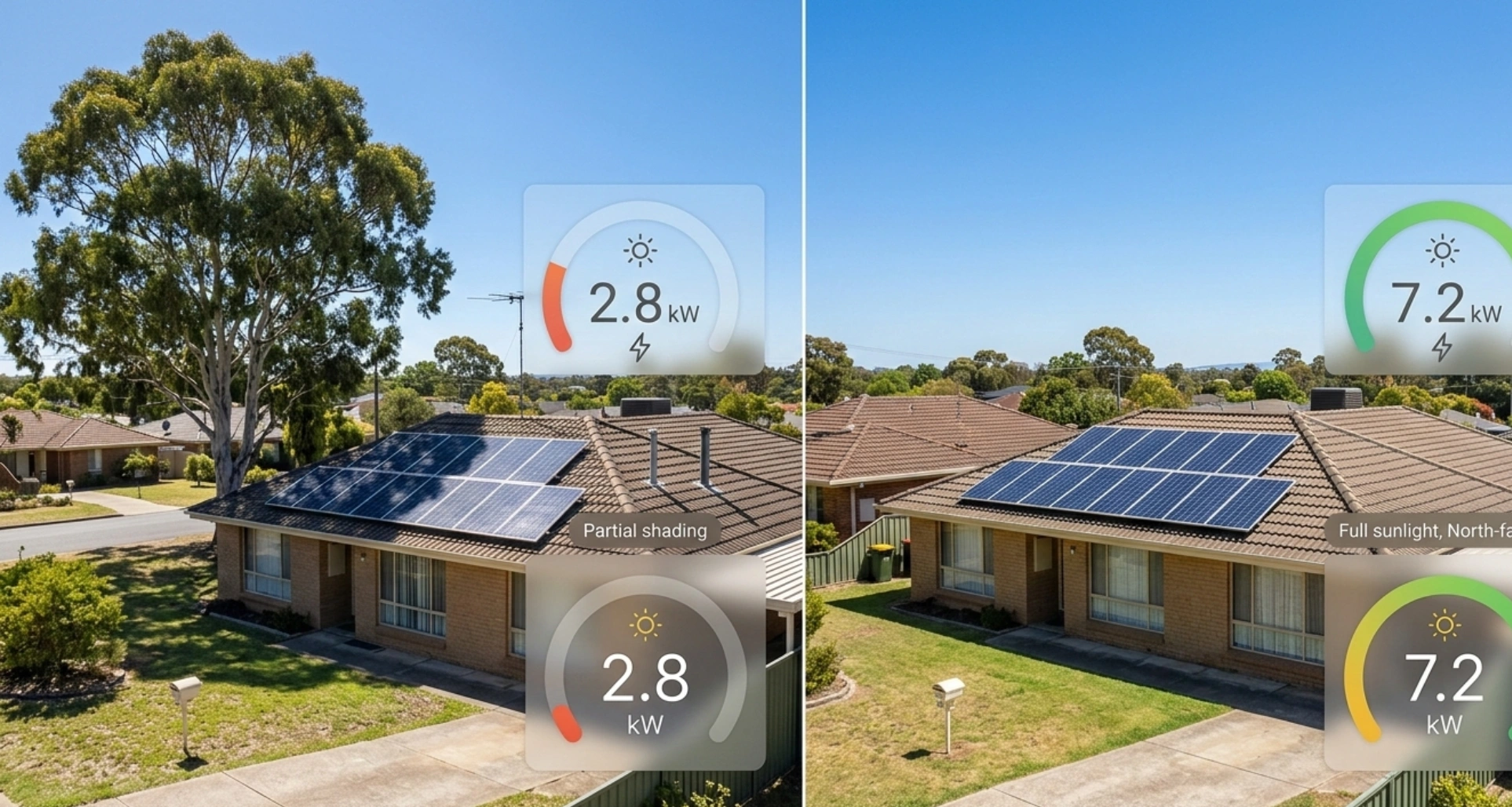
Even a well-sized, high-quality solar system can underperform if the panels are not getting clean, consistent sunlight. Shading from trees, nearby buildings, or roof structures can cut energy production, which means lower bill savings than expected. Poor panel placement, such as the wrong roof face or tilt, can have the same effect.
Systems installed without proper site assessment suffer from hidden shading at key times of day. Fixing these issues can recover a surprising amount of lost output and help the system deliver the savings the homeowner was promised.
Solar panels work best in direct, unblocked sunlight. If even a small section of a panel or string is shaded by trees, chimneys, TV antennas or second-storey extensions, it can reduce the performance of the whole string. This is because panels are usually wired together and the shaded panel pulls the others down to its lower output.
Common shading problems include morning shade from neighbouring houses, afternoon shade from trees or shade from roof features like flues and skylights right across the middle of the day. In practice, this can:
Seasonal changes also matter. A system might seem fine in summer when the sun is high, but lose a lot of output in winter when lower sun angles make shadows longer. Without a proper shading analysis, this is easy to miss at the design stage.
Even if there is no obvious shade, poor placement can limit performance. In Australia, the ideal orientation for most homes is generally north-facing, as it maximises total daily production. East- or west-facing arrays can still be worthwhile but will usually produce less overall energy, so the savings calculation needs to reflect that.
Tilt is just as important. Panels laid almost flat collect less sunlight and stay dirtier for longer. Panels installed at an angle better matched to the local latitude usually:
Technicians assess each roof face for orientation, pitch and structural suitability, then design a layout that balances production, roof safety and visual impact. Where necessary, framing can be used to adjust tilt or split arrays across different roof sections to follow the household’s usage pattern.
If shading or poor placement is suspected, there are several realistic options short of replacing the whole system. Trimming or selectively removing problem branches can restore full sun for most of the day. In some cases, relocating a TV antenna or small flue away from the array can remove thin but costly shadows.
On systems with serious shading or mixed orientations, upgrading to optimisers or microinverters can help each panel operate more independently, so a shaded panel has less impact on the rest. In other cases, it may be more cost-effective to add extra panels in better positions or partially reconfigure the array to a more suitable roof face.
Even if the panels on the roof look perfect, a hidden problem with the inverter or overall system performance can quietly erase the savings. The inverter is the “engine” that converts solar DC power into usable AC power for the home. If it is not working properly or if parts of the system are underperforming, the household will draw more power from the grid and the bills will stay high.
Because most issues do not stop the system completely, many owners do not realise there is a problem until they compare bills months later. Experts regularly find systems generating far below what they were designed to produce simply because performance has not been checked.
An obvious red flag is an inverter that is completely off during the day. The display should be lit and usually show power output in watts or kilowatts. A red or orange fault light or repeated error codes mean the system needs attention. If there is a Wi‑Fi monitoring app, check whether live data is updating and if the daily energy graph looks normal for a sunny day.
Homeowners should also look at recent electricity bills. If usage from the grid has not dropped after installation or if feed‑in credits suddenly fall without a clear reason, such as bad weather, it can indicate an inverter or performance issue.
Even when the inverter is technically working, several issues can drag down output:
These problems rarely trigger an obvious fault light, so the system can run for years delivering only a fraction of its potential and quietly reducing the return on investment.
Owners can do a few basic checks safely. They can confirm the inverter is on during daylight, confirm the monitoring app is connected, look at daily and monthly generation figures and compare those with what the installer originally estimated. They can also note whether output on clear sunny days is consistently much lower than expected for the system size.
However, accurate diagnosis needs professional tools and training. Professional technicians can perform on‑site tests, including checking DC voltages and currents on each string, thermal imaging of connections and panels, verification of inverter settings and comparison of actual output against expected performance for the specific location, tilt and system size. Regular performance checks or an annual service help catch small faults early so the solar system continues to deliver the savings it was designed for.
Solar savings are rarely determined by the panels alone. System sizing, feed-in tariffs, usage timing, shading and unnoticed performance issues all influence how much value a system actually delivers.
When bills remain higher than expected, the cause is usually practical and measurable rather than a total system failure. Reviewing energy habits, tariff structures and system performance often reveals clear opportunities to recover lost savings without major upgrades.
When design, usage patterns and monitoring are properly aligned, solar installation in Sydney is far more likely to produce the consistent, long-term bill reductions homeowners expect.


.webp)

.webp)