When the grid goes down, many households are surprised to discover that their existing solar system also shuts off. As more Australians look for true energy independence and resilience, this limitation has become a major talking point. Platinum Solar Group explores when and how a standard grid‑connected solar system can be upgraded to keep critical appliances running during an outage, the required technologies and which properties are best suited to these solutions.
You will learn the key differences between traditional grid‑tie systems and hybrid or battery‑ready setups, how backup circuits work and the role modern inverters, smart switchgear and batteries play in providing power security. Technicians also outline practical considerations such as compatibility with existing panels and inverters, safety and regulatory requirements and the likely investment involved. Property owners will understand the realistic options for upgrading their current solar installation in Sydney: to handle grid outages, the benefits they can expect and the factors that influence whether such an upgrade is the right move for their home or business.

Many homeowners are surprised to find that their solar panels shut off when the grid goes down. The sun is shining, the panels are on the roof, yet the house is still in the dark. This is not a fault with the system but a safety requirement built into almost all standard grid-connect solar installations.
Understanding why this happens helps homeowners see what is needed if they want backup power during an outage. It also explains the role of the inverter, the grid and any batteries or backup circuits that might be added later.
Most Australian homes have a grid-connected solar system without batteries. In this setup, the solar inverter synchronises with the grid and feeds power into the home and any surplus into the network. When the grid fails, the inverter must shut down almost instantly. This is known as anti‑islanding protection.
If solar were allowed to keep running during a blackout, it could backfeed electricity into power lines that crews believe are de‑energised. This would create a serious electrocution risk and could also damage network equipment. To prevent this, regulators require inverters to detect grid loss and disconnect.
In practice, this means that during a blackout, a standard inverter:
So even if the panels are generating full power, the inverter will not supply the home while the grid is down unless the system has specific backup features.
A basic solar system is designed to work with the grid as its reference and as a kind of energy buffer. It is not designed to manage sudden changes in household load on its own. If a large appliance switches on during a cloudy moment, there is no guarantee the panels can instantly supply that demand.
Without a stable reference and without energy storage, the inverter cannot safely control voltage and frequency for the whole home. It also cannot guarantee that solar output will always match what the house is using. This is why a pure grid-connected system simply turns off instead of trying to operate independently.
To keep selected circuits running in a blackout, the system needs extra hardware and smart control so that it can behave like a small stand‑alone power system when the grid is unavailable.
Systems designed for backup power use a hybrid inverter or backup-capable inverter paired with a battery and a dedicated backup circuit or an essential loads board. When the grid fails, this type of system isolates those circuits from the network so they form their own mini grid.
The inverter then:
Without this combination of isolation, control and storage, a standard solar system must shut down in every grid outage.
Most standard solar systems automatically shut down when the grid goes down. This is a safety requirement so solar panels do not backfeed live power into damaged power lines. To keep power on during blackouts, the system must be able to disconnect safely from the grid and supply certain circuits with stored energy.
Technicians can upgrade an existing system for backup, but it often involves more than just adding batteries. The inverter, electrical wiring and energy management all need to be able to operate in “island” mode when the grid is offline.
The first requirement is a compatible inverter. Many older or basic grid-connected systems use a standard string inverter that cannot operate during an outage at all. For blackout protection, the system needs either a hybrid inverter or a battery system with its own backup inverter.
In practical terms, this may mean replacing the existing inverter with a hybrid model or adding a battery with an integrated backup unit, such as an AC-coupled system. The key technical features to look for are:
Experts assess the existing inverter model, age and warranty to decide whether it is worth integrating or if a replacement will be more reliable and cost-effective.
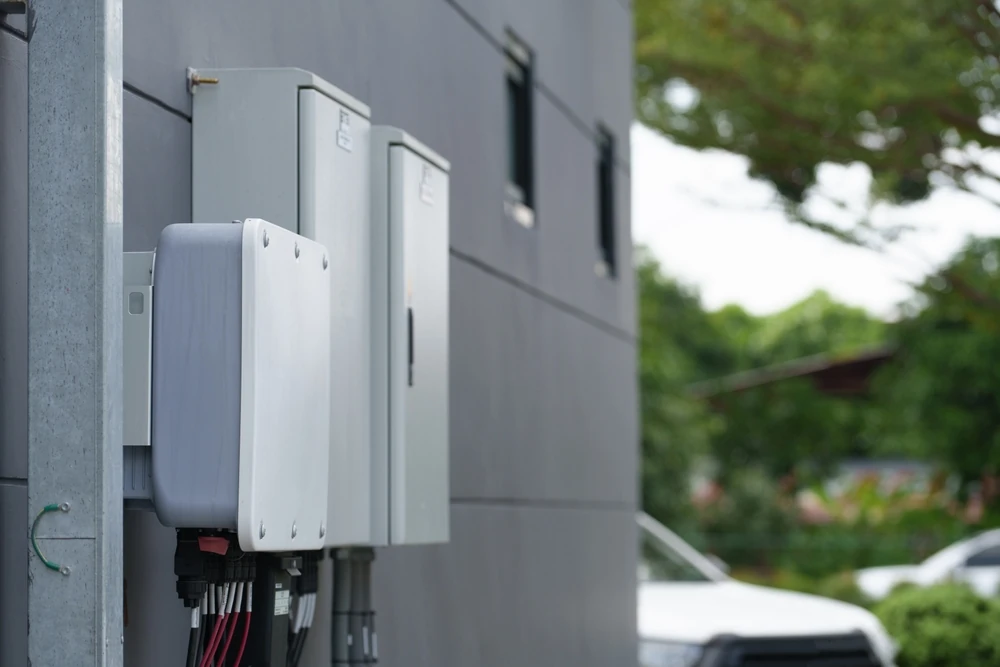
Solar panels alone will not keep the power on during an outage. There must be stored energy to supply loads when the sun is weak or it is night. That means installing a battery system and sizing it to match realistic backup requirements.
Homeowners need to decide what they want to run in a blackout. Essentials usually include lights, Wi-Fi, a fridge, some power points and possibly medical equipment. Air conditioning and electric ovens draw a lot more power and may not be practical to back up in smaller systems. Professionals calculate:
From this, they recommend a battery size and backup power rating that balances cost and resilience.
To operate safely during outages, the home’s electrical layout often needs modification. A backup or “critical loads” circuit is usually created in the switchboard. Only selected circuits are moved onto this backup subboard, so the battery and inverter are not overloaded.
This may involve upgrading the main switchboard, installing a changeover or backup main switch and fitting new protection devices to meet current Australian standards. In some homes, the metre position or existing wiring limits where backup circuits can be run, so professionals inspect on-site to design a compliant layout.
Finally, the system needs intelligent control so it behaves correctly when the grid fails. Modern hybrid and battery systems include software to:
Detect a grid outage and switch to backup within seconds
Prioritise critical loads over non-essential use
Reserve a portion of battery capacity in case an outage occurs
Technicians configure these settings to match each property so the upgraded solar system provides meaningful backup without constant manual intervention.
Many existing rooftop solar systems can be upgraded to provide backup power during grid outages, but it is not as simple as just adding a battery. Whether an upgrade is possible depends on the age of the system, the type of inverter, and the available space and wiring. In many cases, backup capability can be added to an existing solar array without replacing the entire setup.
The key issue is that standard grid-connected systems are designed to shut down when the grid fails. To deliver power during a blackout, the system needs a safe way to isolate from the grid and a controlled source of stored energy, usually a battery, that can supply selected circuits.
Before planning any upgrade, a technical assessment is essential. Experts typically review:
Grid connection rules and DNSP requirements in the local area must be checked too because they determine what type of backup and export control equipment is allowed.
For most homes and businesses, there are three main upgrade paths.
The first is adding a compatible battery to an existing hybrid inverter. If the current inverter is already a hybrid model and supports backup, the upgrade can be relatively straightforward. The installer connects an approved battery, configures backup circuits and sets up the control software. This is often the most cost-effective route.
The second option is replacing a standard string inverter with a new hybrid inverter and battery. The existing panels usually stay in place and are reconnected to the new inverter. This suits systems that are structurally sound but use older electronics.
The third option is adding an AC-coupled battery, such as a battery with its own inverter that connects on the AC side. This is often used where the existing inverter is in good condition but not battery-ready. The AC battery operates alongside the solar inverter and can provide backup to a dedicated backup circuit.
Not every system is worth upgrading. Very small systems often cannot provide meaningful backup even with a battery. Roofs with limited panel capacity may not generate enough surplus energy to charge a battery reliably.
If the existing system is close to the end of its life, has frequent faults or uses discontinued components, professional technicians will usually recommend a full system upgrade. This can include new panels, a hybrid inverter and a right-sized battery so the property is properly set up for blackout protection and future energy needs.
Upgrading a solar system for backup in grid outages usually means adding a battery, backup‑ready inverter and often a changeover or smart switch. It is a significant investment, so it is important to understand typical costs in Australia, what backup can and cannot do and when the upgrade genuinely makes financial and practical sense.
Not every home will need a full whole‑of‑house backup solution. For many households, a smaller backup setup that keeps the essentials running is more cost-effective while still providing peace of mind during blackouts.
For an existing grid‑connected solar system, the main cost is the battery and the compatible inverter or hybrid inverter. Indicative installed prices are:
Additional costs may apply if the switchboard needs upgrades, if the existing inverter is not battery-ready or if cabling runs are long. Properties in regional or bushfire‑prone areas sometimes need extra protective equipment, which adds to the price.
Even with an upgraded system, there are limits to what can be backed up during an outage. In most cases:
During a grid outage, the system must operate in “island” mode for safety. The backup inverter has a maximum output usually between 3 kW and 5 kW for a single‑phase home. If the home tries to draw more than that, the system may trip or shed loads.
For many households, the upgrade is not purely a financial decision. Backup is most compelling when:
From a payback perspective, adding a battery for backup usually has a longer return period than solar panels alone. The battery can still reduce evening grid usage and protect against rising tariffs, but owners should see it as part bill savings and part resilience.
Upgrading an existing solar system to handle grid outages is not only possible but often a highly strategic move for a business. By understanding the difference between standard grid-tied systems and true backup-capable or off-grid-ready configurations, assessing current inverter and panel compatibility, reviewing electrical loads and critical circuits and selecting the right battery and control technology, business owners can transform a simple bill-saving solar array into a genuine resilience asset. For many, the real question is no longer whether solar can be upgraded to handle grid outages but when it makes the most sense to seize that opportunity.


.webp)

.webp)