Choosing the right location for a solar battery is an important part of creating a safe and reliable energy system. Platinum Solar Group helps homeowners determine whether a garage, an outdoor wall, or another suitable location is best, based on the battery, property layout, environmental conditions and applicable Australian requirements.
A solar battery installation needs to account for more than convenience. Temperature, ventilation, safety clearances, weather protection and access for maintenance can all affect where the battery should be placed. The distance to the inverter and switchboard may also influence the final location.
Understanding these factors makes it easier to compare garage and outdoor installations and choose a position that supports safe operation, reliable performance and long-term use.
The best location for a solar battery depends on more than available space. Product specifications, Australian standards, local network requirements and conditions around the property all need to be considered. Together, these factors determine whether a battery can be safely installed in a garage, outdoors or in another suitable location. The type and design of your battery storage system can also influence its installation requirements and suitable location.
The location should protect the battery from heat, moisture and physical damage while allowing enough space for ventilation, maintenance and safe access. It should also meet applicable requirements for separation from doors, windows, habitable rooms, gas equipment and other potential hazards.
When assessing a potential location, installers consider:
If you are adding a battery to an existing solar system, the current inverter, switchboard, available space and electrical layout should also be considered.
A site assessment allows these factors to be considered together rather than choosing a location based on convenience alone. The final position should meet the battery manufacturer's requirements and applicable standards while remaining practical for everyday use.
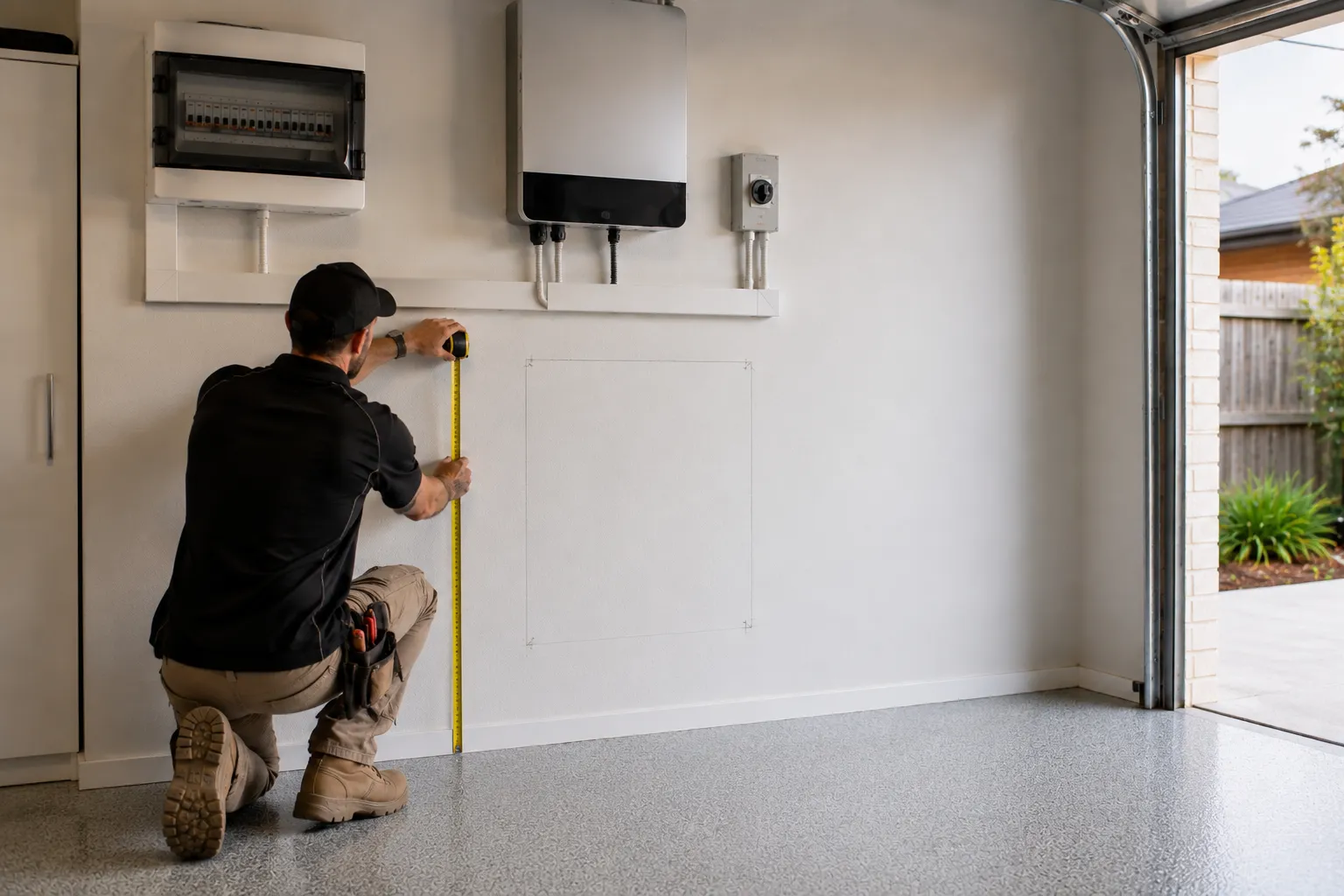
A solar battery needs enough space around it for ventilation, safe operation and future maintenance. The exact clearance varies between battery models, so the manufacturer's installation requirements should always be followed.
The area around the battery should remain clear of stored items, vehicles and combustible materials. In a garage, shelving or parked cars should not block access or restrict airflow. Outdoor installations may also need additional space for weather protection, mounting systems or impact barriers.
A site assessment can confirm whether the available space meets the required clearances while providing safe access to the battery and its electrical components.
Yes, a solar battery can be installed near equipment such as a solar inverter, switchboard or EV charger, provided the required clearances and safety requirements are met. Keeping these components reasonably close can simplify cable runs and make servicing more convenient.
However, the battery should not be positioned too close to heat-producing equipment, gas appliances or other potential hazards. There must also be enough space to maintain airflow and allow each component to be safely accessed.
The exact separation requirements vary depending on the battery model and installation conditions.
A garage can be a practical location for a solar battery because it provides protection from direct weather and is often close to the home's switchboard and solar inverter. However, available space, temperature, wall construction and safety requirements all need to be considered before installation.
The battery should be installed where it has sufficient space for ventilation, servicing and safe access. In a garage, it also needs protection from vehicle impact, stored equipment and combustible materials.
The installation area should remain clear so an electrician can safely reach the battery and its isolators when required. Where vehicles are regularly parked nearby, the installer should assess the risk of accidental impact and determine whether additional protection is required.
Garages can become hot during summer when they are poorly ventilated or constructed from materials that absorb and retain heat. Excessive temperatures can affect battery performance and lifespan, so the proposed location should allow heat to dissipate and should not be exposed to direct sunlight.
Detached garages may require additional consideration if ventilation is limited or temperatures regularly become high. The battery manufacturer's specified operating conditions should be checked before the location is selected.
The battery is often positioned near the switchboard or solar inverter to simplify cable runs, but required clearances between electrical equipment must still be maintained.
The mounting surface must also be strong enough to support the battery. Walls adjoining habitable rooms may have additional fire safety requirements, so the installer should assess the wall construction and surrounding layout before installation.
A site assessment can determine whether the garage provides a suitable location based on the battery manufacturer's requirements, Australian standards and the layout of the property. If it does not, an outdoor location may be a more suitable alternative.
Installing a solar battery outside can be practical when indoor space is limited or when an outdoor position provides a convenient connection to the inverter or switchboard. However, the battery must be protected from weather, excessive heat, flooding and physical damage while meeting proper requirements and standards.
Outdoor batteries should be protected from direct sunlight, heavy rain and extreme temperatures. A shaded or covered location is often preferable, while areas prone to flooding or water pooling should be avoided.
The battery must also have an enclosure and mounting system suitable for outdoor conditions. The manufacturer's specifications should be checked to confirm that the proposed location is appropriate for the particular battery.
The battery needs adequate separation from doors, windows, habitable rooms, gas equipment and combustible materials where applicable. There should also be enough clear space for installers to inspect, service and safely isolate the system.
The exact requirements depend on the battery model and installation conditions, so the proposed position should be assessed before installation.
Coastal properties may require additional consideration for salt exposure and corrosion, while rural properties may require protection from dust, vegetation and wildlife. The battery should also be protected from accidental impact and unauthorised access without making it difficult to reach for maintenance.
A site assessment can help identify an outdoor position that balances safety, environmental protection and practical access.
Solar batteries cannot be installed in every area of a home or property. Their location must meet applicable network rules to reduce fire risks, protect occupants and provide safe access for servicing.
Some locations may have additional restrictions because of their proximity to living spaces, escape routes, combustible materials or potential ignition sources. Here are some common considerations:
The required separation from doors, windows, vents, habitable rooms and other equipment depends on the battery model and installation conditions. Where a battery is mounted against a wall adjoining a living area, the wall construction may also need to meet specific fire-resistance requirements.
Sufficient working space must be maintained around the battery for ventilation, inspection and servicing. Shelving, stored items, parked vehicles and other equipment should not block access to the battery, isolators or associated electrical components.
Because clearance requirements can vary between systems, the final position should always be confirmed by a qualified installer.
A suitable solar battery location should protect the system from excessive heat, moisture, direct sunlight and physical damage. Both garages and outdoor areas can work well when the battery remains within the manufacturer's operating conditions and has adequate airflow and protection.
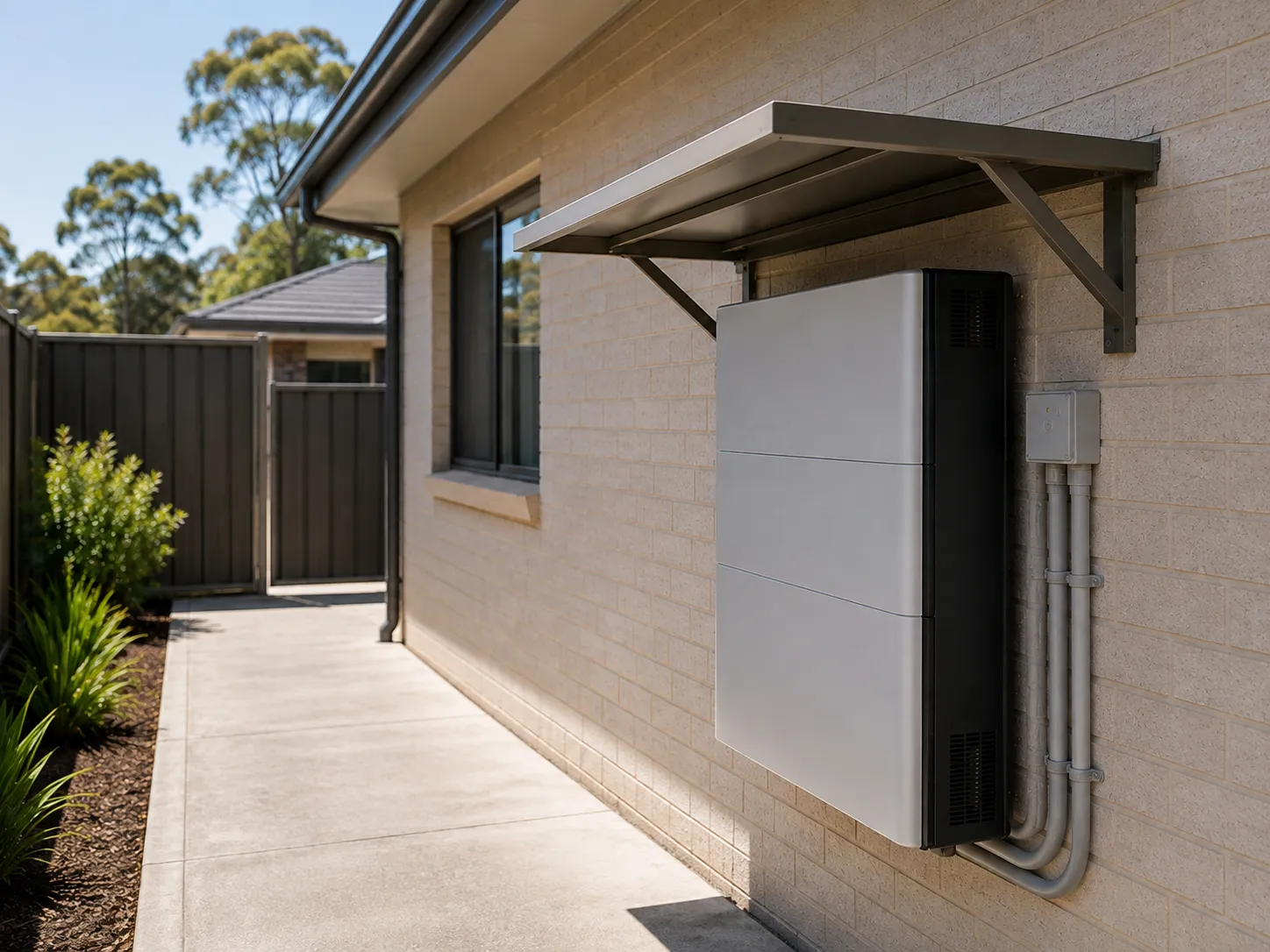
Temperature is important because prolonged heat can affect battery performance and accelerate degradation. Garages can provide useful shelter from the weather but may become hot during summer, while outdoor batteries need careful positioning to avoid direct sun and reflected heat.
For outdoor installations, the battery should be:
Physical protection is also important. In a garage, the battery should be positioned away from vehicles, tools and stored items that could cause impact. Outdoors, it should be protected from vehicles, machinery and unauthorised access, with a suitable barrier or enclosure used where necessary.
A solar battery installation must meet relevant requirements before it can be commissioned. The battery, inverter, switchboard, cabling and protection equipment must be correctly rated and installed, with suitable isolators and circuit protection to allow the system to be safely disconnected during maintenance or an emergency.
Fire and location requirements are also important. The battery needs appropriate separation from habitable rooms, doors, windows, gas equipment and other potential hazards, while the installation area must remain clear of combustible materials and obstructions. Garage installations also need protection from vehicle impact, while outdoor systems require suitable protection from weather and flooding.
Because requirements vary between battery models and properties, a qualified installer should assess the proposed location and confirm the applicable Australian standards, manufacturer requirements and network rules. This helps ensure the system is installed safely, operates reliably and meets the necessary compliance requirements.
A site assessment helps determine whether a garage, outdoor wall or another location is the most suitable for a solar battery. The installer considers the property's layout, battery requirements and local network conditions.
During the assessment, the installer will typically check:
If indoor and outdoor locations are suitable, the installer can compare all the necessary factors. This helps identify a location that is safe, compliant and practical for the property's long-term energy needs.
A solar battery can be installed safely in a garage or outdoors when the location is carefully selected and meets applicable Australian standards and manufacturer requirements. Factors such as temperature, ventilation, weather exposure, clearances, access and the property layout all influence which option is most suitable.
The right location will ultimately depend on the battery system, available space and the homeowner's energy needs. Platinum Solar Group can assess these factors and help determine a suitable position that supports safe operation, reliable performance and long-term battery life.


.webp)

.webp)