Solar panel hotspots often begin as small areas of localised overheating, but they can cause costly and potentially serious damage when left unresolved. A damaged, shaded or defective cell can reduce energy production, accelerate panel deterioration and place additional stress on nearby components. Platinum Solar Group helps property owners identify these issues and determine when professional solar system repairs are required to protect performance, safety and long-term return on investment.
This guide explains how solar panel hotspots form, what causes them and how they affect system output. It also covers common warning signs, professional testing methods and the circumstances in which an inspection should be arranged. Understanding these issues can help property owners respond before a minor performance problem develops into permanent panel damage or a broader electrical fault.
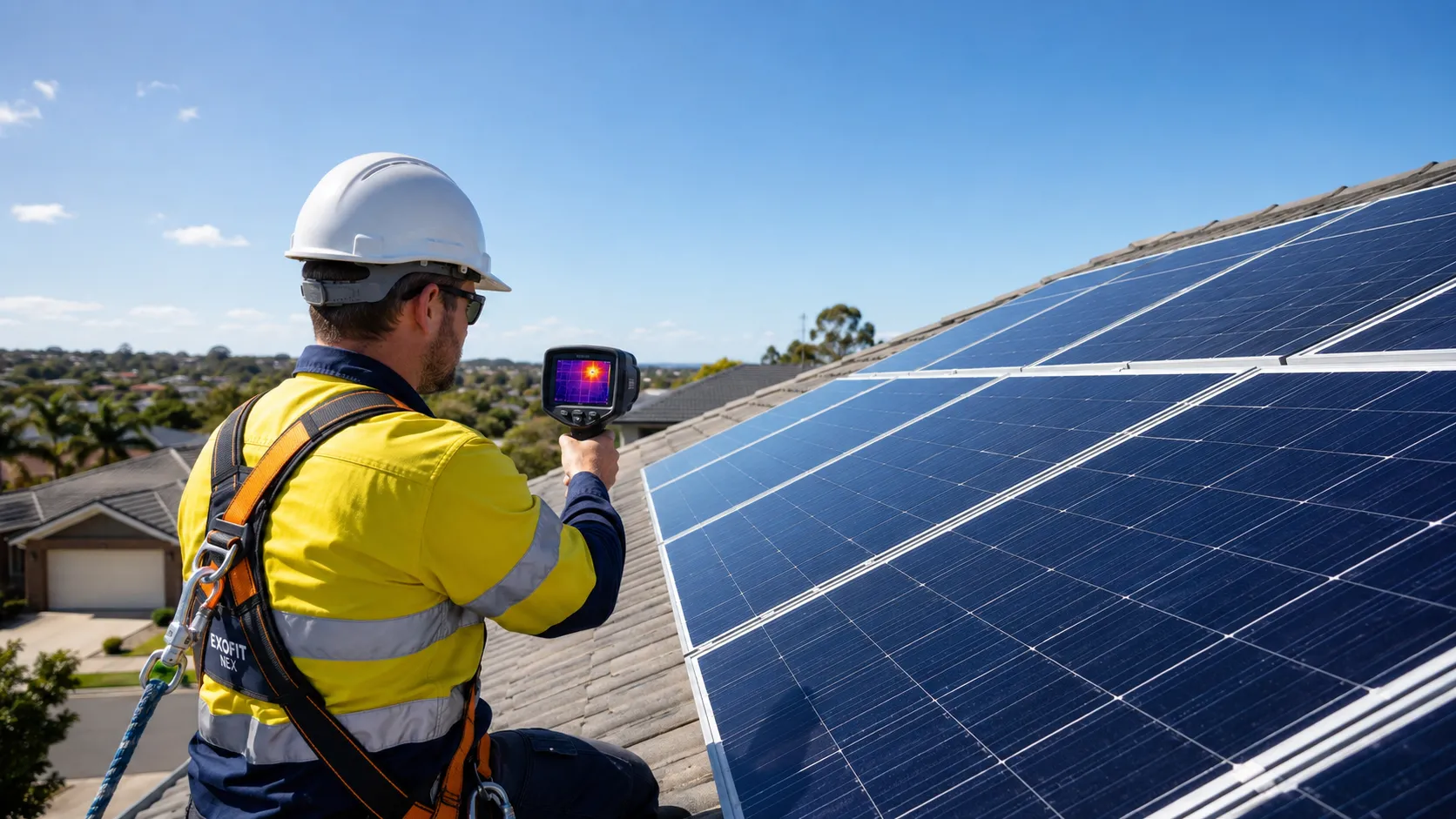
A solar panel hotspot is a small area of a module that becomes significantly hotter than the surrounding cells or components. It develops when part of the panel stops generating electricity as efficiently as the rest of the module and begins dissipating electrical energy as heat.
Solar panels contain multiple cells connected in series. Under normal conditions, the cells produce similar amounts of current. When one cell becomes shaded, damaged or defective, it may not generate the same current as the other cells in the circuit.
The affected cell can then be driven into reverse bias. Instead of contributing electricity efficiently, it resists the current flowing through the series-connected cells and converts some of that electrical energy into heat. This concentrated heating creates the hotspot.
Some hotspots develop gradually as modules age, while others can appear much earlier because of manufacturing defects, transport damage, installation faults, severe shading or damaged electrical connections.
Solar panels generally contain bypass diodes that allow electrical current to move around an affected section of the module. These devices can reduce power loss and limit the reverse voltage placed across groups of cells when part of a panel is shaded.
However, bypass diodes do not necessarily prevent every hotspot.
A highly localised defect within an individual cell may still generate excessive heat. Hotspots can also develop when:
Bypass diodes are therefore an important protective feature, but they do not eliminate the need to investigate persistent temperature anomalies or unexplained performance losses.
Hotspots can result from problems within the panel, changes around the solar array or faults in related electrical components. Identifying the actual cause is essential because cleaning, repairing a connection and replacing a damaged module are very different solutions.
Localised shading is one of the most common contributors to hotspot formation. A small shadow across one section of a panel can create an imbalance between the affected cells and those that remain in full sunlight.
Common sources of shading include:
Shading patterns may also change throughout the year as the sun’s position changes. A panel that performs normally during one season may experience repeated shading during another.
General dust across an entire array usually causes a broader reduction in output. Localised soiling is more likely to create the uneven conditions associated with hotspots.
Bird droppings, leaf litter and compacted dirt can repeatedly shade the same group of cells during periods of strong sunlight. Over time, this may place damaging thermal stress on the affected area.
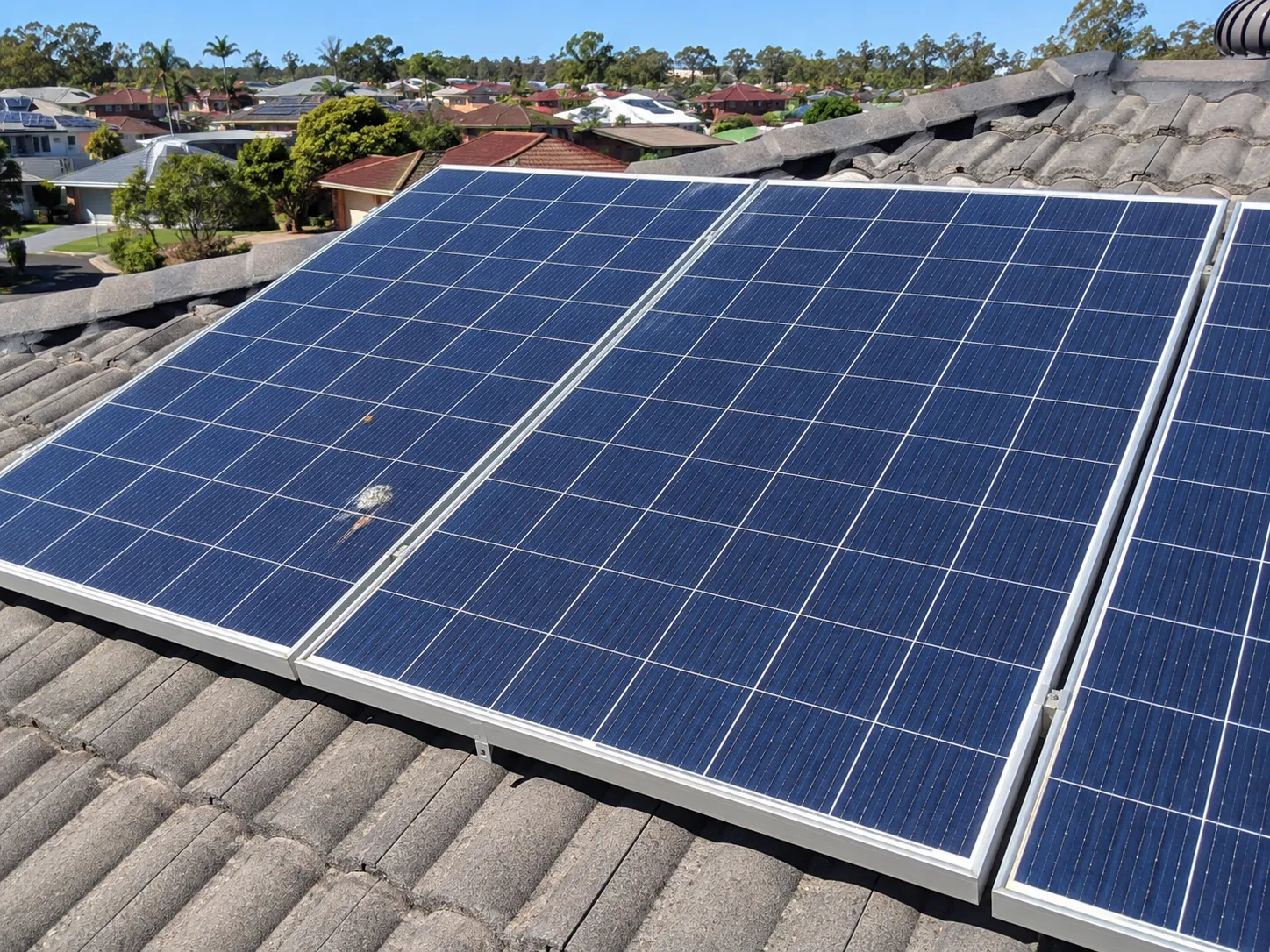
Panels installed at shallow angles may be particularly vulnerable because rainwater may not wash debris from the lower edges effectively. Dirt can collect along the module frame and create persistent bands of partial shading.
Where soiling is the only cause, appropriate cleaning may remove the obstruction and restore performance. However, cleaning cannot reverse damage that has already occurred to a cell, diode, encapsulant or electrical connection.
Roof-mounted panels should not be cleaned by an untrained property owner where the work involves climbing, electrical hazards or working near damaged components.
Solar cells are thin and brittle. Small cracks can develop during manufacturing, transport, installation or years of thermal and mechanical stress.
Microcracks may initially have little effect on performance. As they expand, parts of a cell can become electrically isolated or conduct less current than surrounding areas. The remaining active sections may then carry greater electrical stress, leading to uneven heating.
Potential causes of cell damage include:
Damage does not always produce obvious cracks in the front glass. The cells beneath the glass may be affected even when the panel appears intact from ground level.
Hotspots can also develop because of defects within the module itself. These may include:
A manufacturing fault may become apparent soon after installation or only after the panel has been exposed to years of heat, moisture and electrical loading.
Normal panel degradation does not automatically lead to hotspots. However, age-related material deterioration can increase the likelihood of localised faults. Understanding why solar systems lose performance over time can help distinguish normal degradation from faults that require further investigation.
Solar modules are exposed to ultraviolet radiation, moisture, high rooftop temperatures and repeated thermal cycling. These conditions can gradually affect internal materials and electrical connections.
Potential age-related contributors include:
When degradation is uneven, one section of a module may become weaker than neighbouring cells and begin operating at a higher temperature.
Solar systems in coastal or industrial environments may be exposed to salt, airborne contaminants and corrosive particles.
These materials can settle around:
Corrosion can increase electrical resistance at connection points. A high-resistance connection converts more electrical energy into heat and may create a thermal anomaly.
Overheating at a connector, junction box or isolator is not necessarily a cell-level hotspot. It is a separate electrical fault that may involve corrosion, incorrect termination, loose connections or arcing. These issues can be identified during the same inspection but should be diagnosed and repaired according to their actual cause.
Differences between panels in the same string can also contribute to uneven performance.
Relevant causes may include:
Normal differences in panel ageing do not necessarily make the original system configuration unsafe. The concern arises when a fault or unsuitable system change creates a substantial mismatch that causes one panel or group of cells to operate abnormally.
A persistent hotspot does more than make one part of a panel slightly warmer. Local temperatures can rise well above the surrounding module temperature, affecting performance, materials and electrical safety.
An overheated or reverse-biased cell produces less electricity than the surrounding cells. Because cells and modules are electrically connected, one underperforming area can reduce the output of a larger section of the system.
Depending on the system design, a hotspot may affect:
Property owners may notice a gradual reduction in energy yield that cannot be explained by seasonal changes, weather conditions or normal panel degradation.
Repeated high temperatures place additional stress on the materials surrounding the affected cell.
Over time, this may contribute to:
Once physical heat damage has occurred, it will not usually reverse. Even if the panel continues producing some electricity, the affected area may deteriorate further.
Severe hotspots can damage insulation and surrounding materials. Persistent overheating may lead to scorching, melting or electrical breakdown within the module.
Thermal inspections may also identify overheating at connectors, junction boxes, cables or isolators. These separate faults may involve high resistance or arcing and can present a significant electrical or fire risk.
Major incidents are not the normal outcome of a properly designed and maintained solar installation. However, visible scorching, melted components, repeated electrical faults or a burning smell should be treated as urgent warning signs.
Hotspots are more likely to appear in areas exposed to recurring shading, contamination, movement or physical stress.
Common locations include:
A hotspot can occur anywhere on the array, so its location alone is not enough to confirm the cause.
Hotspots do not always cause an immediate system failure. They often appear through gradual performance changes, recurring inverter alerts or subtle physical damage.
Some warning signs can be identified through the monitoring system or from a safe position on the ground. Confirming the problem, however, requires professional testing.
A sustained reduction in energy output is one of the most useful early indicators of a possible panel fault.
Warning patterns include:
A single low-output day does not prove that a hotspot is present. Cloud cover, high temperatures, inverter behaviour, grid conditions and temporary shading can all affect production.
The concern is a repeated or unexplained pattern that remains after ordinary causes have been considered.
Physical changes may indicate that a module or electrical component has experienced excessive heat.
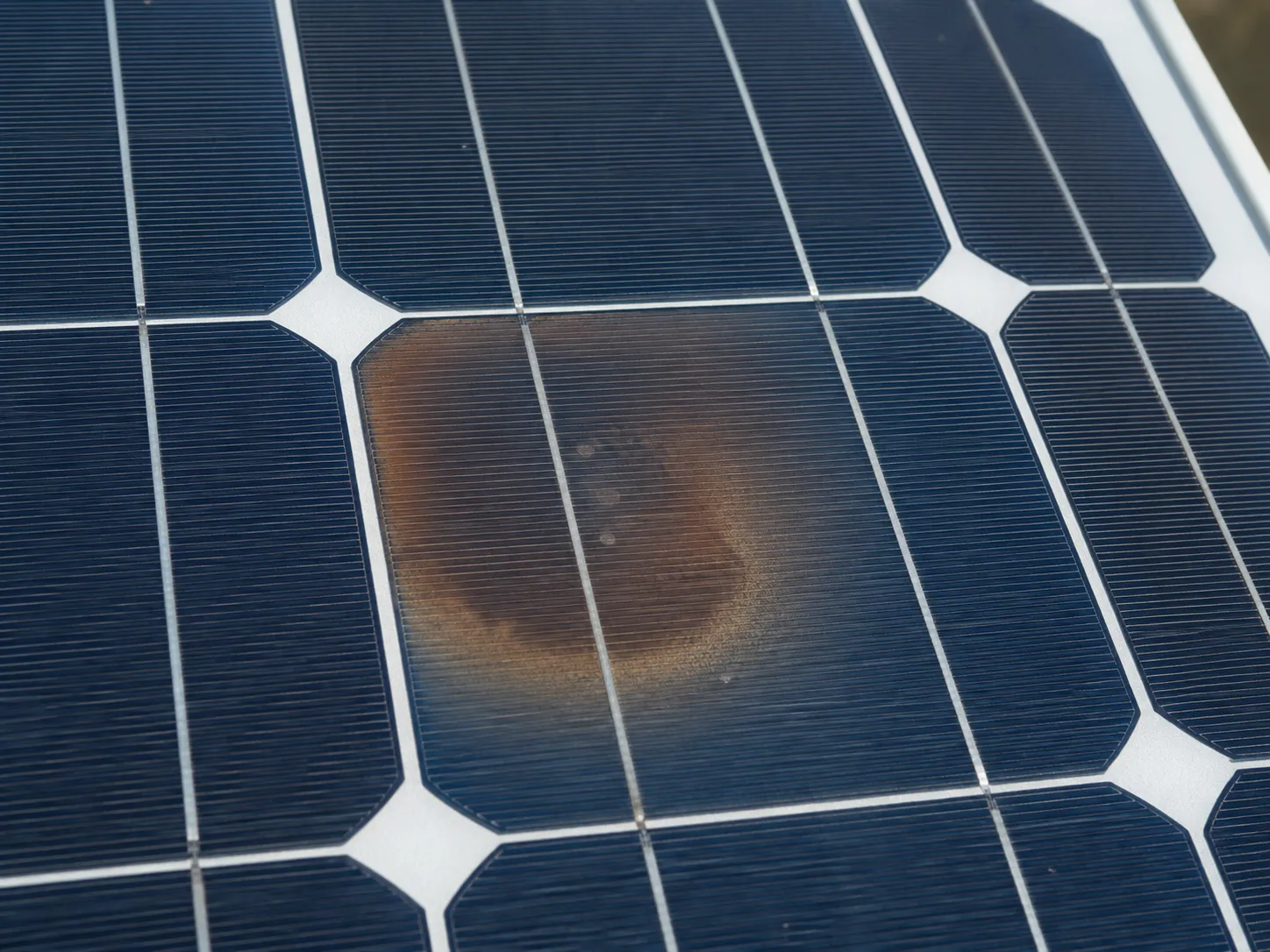
Possible signs include:
Some forms of discolouration may result from ageing or manufacturing variations rather than an active hotspot. Visual signs therefore need to be assessed together with thermal and electrical test results.
Property owners should not climb onto the roof to obtain a closer view. Where the array cannot be checked safely from the ground, it should be inspected by an appropriately trained professional.
Electrical stress within a panel string may cause inverter warnings or intermittent shutdowns.
Relevant warning signs may include:
These alerts do not confirm a cell hotspot by themselves. They may also point to damaged cabling, moisture ingress, connector problems, isolator faults or inverter issues.
Recurring errors should be professionally investigated rather than repeatedly cleared or ignored.
Abnormal electrical behaviour can indicate overheating or arcing elsewhere in the solar installation.
An urgent inspection should be arranged if there is:
These symptoms may not be caused by a solar cell hotspot. They can indicate a separate and potentially serious connection or equipment fault.
Property owners should stay away from damaged equipment and avoid touching cables, panels, connectors or isolators. Emergency services should be contacted if there is smoke, fire or an immediate danger to the property.
Hotspots cannot be confirmed reliably by touching the panel, looking at a single monitoring result or relying on visible discolouration alone.
Solar modules naturally become hot during operation, and their temperature changes with:
Professional testing helps distinguish normal temperature variation from a genuine defect and identifies whether the problem is located within a cell, module, connector, cable, junction box or another system component.
Regularly monitoring the performance of the solar system can help property owners identify unexpected production losses, inverter faults, shading or panel damage.
The inspection may begin with a review of:
Monitoring data can help identify when the problem began and whether it affects one panel, one string or the complete system.
However, monitoring alone may not reveal the physical cause.
A professional visual inspection can identify:
Visual inspection is an important diagnostic step, but it is usually combined with electrical and thermal testing.
Electrical testing can show whether a panel or string is operating differently from comparable parts of the array.
Depending on the system and suspected fault, testing may include:
An IV curve with steps, distortion or unexpected losses may point to shading, mismatch, internal damage or bypass diode activity.
Electrical testing also helps determine whether the issue is confined to one module or involves a larger part of the system.
Infrared thermography is one of the most effective methods for locating temperature anomalies across solar modules and related components.
A thermal camera can identify elevated temperatures at:
Testing must be completed under suitable conditions. The array generally needs adequate sunlight and electrical loading so that genuine faults produce meaningful temperature differences.
Temporary shade, reflections, wind and uneven sunlight can affect thermal images. Results must therefore be interpreted by someone who understands solar PV systems and infrared inspection.
A warm area does not automatically prove that a panel needs replacement. The technician must consider the temperature pattern, surrounding conditions, electrical test results and physical condition of the component.
Professional documentation can also assist where a product warranty, performance warranty or insurance claim may apply.
Depending on the provider, supporting information may include:
Manufacturers, retailers and insurers have different claim requirements. Property owners should avoid assuming that one test result will automatically qualify the panel for replacement.
Not every small change in production indicates a hotspot. However, persistent performance losses, visible heat damage or recurring electrical faults should not be ignored.
A professional assessment should be considered when:
Historical comparisons should account for seasonal weather, system age, panel temperature and changes in electricity use.
An inspection should be arranged promptly if there is:
Even where the panel is still generating electricity, visible heat damage may continue worsening under normal operation.
Repeated tripping, crackling, burning smells, smoke or melted equipment requires urgent attention.
Property owners should not:
Solar panels continue producing DC electricity whenever they are exposed to light. Switching off the inverter does not necessarily remove electrical voltage from the cables between the panels and the inverter.
The system should be assessed by an appropriately licensed electrician experienced in solar PV fault-finding.
A solar inspection may also be appropriate after:
Some forms of damage are not immediately visible and may only become apparent once the panel returns to full operating load.
Once testing confirms a hotspot or another thermal fault, the next step depends on its severity, location and cause.
Not every thermal anomaly requires the complete solar system to be replaced. Some problems can be resolved through cleaning, connection repairs or replacing a single component. Internal cell damage, however, usually requires module replacement.
The electrician will first assess whether the system can continue operating safely.
Depending on the fault, the response may involve:
The appropriate response depends on the temperature difference, physical damage, electrical test results and likelihood of arcing or insulation failure.
Property owners should not isolate damaged rooftop equipment themselves unless they are following clear emergency instructions from an appropriately qualified professional and can do so without approaching the hazard.
Where the issue is caused only by dirt, leaves or bird droppings and no permanent damage is found, professional cleaning may restore normal operation.
After cleaning, the system should be checked again to confirm that:
Cleaning will not repair an already damaged cell, failed bypass diode or overheated connection.
If the heat originates from a connector, cable, isolator or junction box, the affected electrical component may need to be repaired or replaced.
Possible work may include:
Any repair involving solar PV wiring or electrical components should be completed by an appropriately licensed electrician.
Internal cell damage, severe microcracking, delamination or persistent module-level overheating is often not practically repairable.
Panel replacement may be recommended when:
A replacement module must be electrically and physically suitable for the existing system. Its voltage, current, dimensions, connector type and compatibility with the remaining string should be considered.
In older systems, an exact replacement may no longer be available. The electrician may need to assess alternative modules or changes to the string arrangement.
Where the hotspot results from a manufacturing defect, the module may be eligible for consideration under a product or performance warranty. Property owners may also have consumer guarantee rights for solar systems that apply separately from the manufacturer’s written warranty.
The technician may document:
Warranty coverage depends on the provider’s terms, the age of the installation and the available supporting evidence.
After repairs or replacement, the system should be tested again to confirm that the fault has been resolved.
Follow-up checks may include:
The results should be recorded so future inspections can pay attention to areas that previously experienced elevated temperatures or electrical stress.
Not every hotspot can be prevented, particularly where an internal manufacturing fault is involved. However, appropriate monitoring and maintenance can reduce the likelihood that a developing problem will remain unnoticed. Following an annual solar maintenance routine can help identify changes in output, shading, debris and inverter performance before they develop into more serious faults.
Useful preventive measures include:
Property owners should follow the maintenance recommendations supplied with the system and avoid attempting electrical repairs or unsafe roof access.
Solar panel hotspots are more than a cosmetic concern. Localised overheating can reduce energy production, accelerate panel deterioration and, in severe cases, contribute to insulation damage or electrical safety risks. Warning signs such as unexplained performance losses, recurring inverter faults, discolouration, burn marks or melted components should be professionally investigated rather than ignored.
A proper diagnosis may involve monitoring analysis, visual inspection, electrical testing and thermal imaging. Cleaning may resolve localised shading caused by dirt or debris, but it will not repair damaged cells, failed diodes or overheated electrical connections. Platinum Solar Group can inspect the solar installation, identify the source of abnormal heating and recommend suitable repairs or panel replacement to restore safe, reliable and efficient performance.


.webp)

.webp)