Adding an electric vehicle to a home energy system changes electricity demand, often increasing consumption overnight and making battery sizing a critical decision. In solar battery installation, capacity must be carefully matched to both household usage and EV charging patterns to avoid systems that are either insufficient or unnecessarily oversized. This article explores how EV charging behaviour influences battery requirements, how much usable storage is needed and how solar generation integrates into the overall energy strategy.
The goal is to provide a clear understanding of the real-world trade-offs involved in designing a system that supports EV use, reduces grid reliance and delivers long-term value.
EV charging is usually the single largest new electrical load in a home. That extra demand has a direct impact on how big a solar battery needs to be if the goal is to run the car mostly on solar and cut grid reliance. Sizing the battery correctly depends on how far the vehicle is driven each day, how fast it is charged and when charging usually takes place.
The key point is that EVs can easily double household electricity use. A battery that is adequate for general home backup may be far too small once regular EV charging is added. Understanding EV energy use in kilowatt hours rather than just charger kilowatts is essential.

The main driver of battery size is how many kilometres the EV covers on a typical day. Most modern EVs use around 13 to 20 kWh per 100 km, depending on driving conditions. As a simple guide:
To cover both the home’s evening use and this EV's demand from stored solar usually means a battery that holds at least the home’s nightly load plus the car’s typical daily energy. For example, if the home uses 8 kWh each evening and the EV needs 8 kWh for commuting, a battery under about 15 to 20 kWh will often hit empty before morning and the car will pull from the grid.
The charger size in kW affects how quickly the battery is drained but does not change the total energy needed. A 7 kW wall charger putting 14 kWh into an EV simply does it in 2 hours rather than 4. This matters for battery sizing and inverter selection.
A high-power home charger paired with a small battery often leads to:
For regular overnight charging, a larger battery with a suitably sized hybrid inverter is usually required if the goal is to keep EV charging predominantly on solar energy. Slower charging rates can allow a smaller battery to handle the same daily kilometres because the battery is not being emptied as quickly.
When the EV is usually at home, it determines how heavily the battery is used. Daytime charging lets solar panels supply a large share of the energy directly, reducing the required battery capacity. An EV that is home from mid-afternoon can often be topped up using solar generation, with only a moderate battery needed for the home’s night load.
Night charging is more demanding. If the car arrives home after sunset and is charged every night, the battery effectively becomes the main fuel tank for the EV. In that scenario, the battery often needs to be sized close to nighttime household use plus and the EV’s regular overnight charge.
This typically pushes battery sizing towards the 15 to 30 kWh range for households that want most EV charging off-grid power, particularly where commuting distances are longer or multiple EVs are present.
Sizing a solar battery for a home with an EV is not just about the car. The rest of the household load can easily match or exceed EV charging, especially in the evening when the battery is expected to carry the home. A realistic picture of other electricity use is essential before deciding how many kilowatt-hours of storage make sense.
The key is to identify what typically runs during peak evening hours and overnight, then estimate how many kilowatt-hours those appliances draw. Without this step, it is easy to oversize or undersize a battery and end up either wasting potential solar or still relying heavily on the grid.
Beyond the obvious high-draw appliances, many homes have a substantial base load that runs 24/7. This base load steadily eats into battery capacity overnight.
Fridges and freezers cycle on and off but, across 24 hours, typically consume 1 to 2 kWh each. Multiple units increase this figure. Network equipment, televisions, game consoles, standby electronics and security systems together can quietly add 200 to 500 watts of constant draw, which equates to 2 to 4 kWh over a long evening and night.
Pumps, including pool pumps, bore pumps and large aquarium systems, can also be significant. Where possible, these should be scheduled to run in daylight so that solar rather than the battery carries them.
To translate all this into a practical number, start by reviewing recent electricity bills and, if available, smart metre or monitoring data. Identify total daily consumption in kWh and typical evening consumption from late afternoon to early morning.
If the home uses, for example, 12 kWh from 4 pm to 7 am and the EV is expected to use 6 kWh in that period, a battery that can reliably deliver at least 18 kWh of usable capacity is usually required to cover both. If some loads can be shifted to daytime, such as hot water or pool pumps, a smaller battery may be sufficient while still meeting EV charging needs.
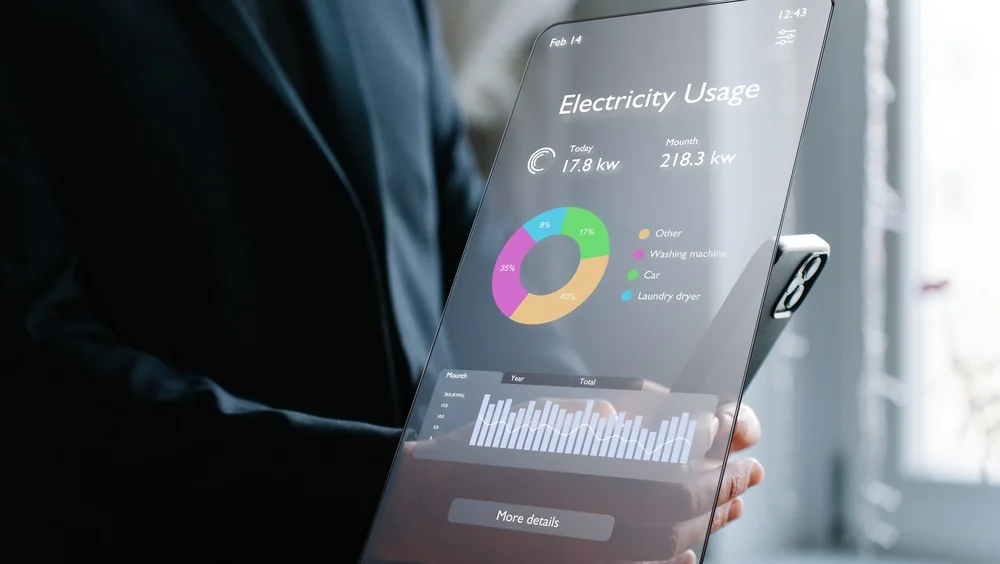
A smaller solar battery can still work very effectively in a home with an EV if the charging pattern and household usage are well matched to solar production. In many situations, the goal is not to cover every kilometre of EV driving from stored solar but to reduce grid reliance at key times and keep costs under control.
The right size often comes down to when the EV is at home, how many kilometres are driven each week and how flexible charging times can be. In lower demand or flexible households, a compact battery can deliver most of the financial and resilience benefits without the higher upfront cost of a large system.
A smaller battery is usually enough if the EV is at home during daylight hours, so it can charge directly from rooftop solar rather than heavily from storage. Typical scenarios are:
The solar system can send a share of its generation straight to the EV in real time. The battery then only needs to cover evening household loads, such as lighting, appliances and cooking, rather than a large overnight EV charge. A battery in the range of 5 to 10 kWh can often be appropriate because it primarily serves the home, not the car.
Households that drive relatively few kilometres per day tend to place less demand on stored energy and can usually consider smaller storage. Examples could be:
As a rough guide, many EVs use around 14 to 18 kWh per 100 km in normal conditions. A driver covering 30 km daily might need only 5 kWh of EV energy per day. A modest battery can comfortably contribute a portion of that, along with evening household use, while the rest is supplied directly from daytime solar or off‑peak grid power if needed.
A smaller battery can also be effective if the household is prepared to use smart charging strategies rather than relying solely on stored solar.
If the home has a time‑of‑use tariff, the EV can charge during cheap off‑peak periods overnight, while the battery is reserved for the most expensive peak periods, usually late afternoon and early evening. In this arrangement, the battery does not need to hold enough energy for a full EV charge.
A compact battery paired with a smart charger or EV timer can still produce strong bill savings by avoiding high tariff windows, even if part of the EV charging comes from low‑cost grid energy. This setup often suits apartments or smaller homes with limited roof space where a large battery is not practical.
A larger solar battery typically makes sense when an electric vehicle places consistent demand on the home’s energy use or when there is a strong priority on energy independence and protection from peak tariffs. A bigger system is less about luxury storage and more about reliably covering real-world loads at night and in poor solar conditions.
Sizing up is most beneficial when daily consumption regularly exceeds what a small battery can deliver. The goal is to capture more of the daytime solar generation that would otherwise be exported at a low feed‑in rate and use it later for EV charging and household needs.
A larger battery is more suitable when the EV is usually charged at home in the evening or overnight. Night charging removes the ability to rely directly on rooftop solar, so the battery must cover both the car and the household baseline.
As a rough guide, a typical EV might use 10 to 20 kWh for daily commuting, depending on distance and driving style. A household might use another 8 to 15 kWh overnight for appliances, lighting and heating or cooling. A small 5 to 7 kWh battery would be exhausted early in the evening, forcing the home back onto grid power for the rest of the night and for most of the EV charging session.
This type of setup is most sensible for households that plug in most nights or several times a week and have limited access to workplace or public charging.
Where there are two EVs or one EV with a long daily commute, a larger battery capacity becomes more rational. Each additional 50 km of daily driving often adds around 8 to 10 kWh of demand. Once daily EV use climbs past 20 to 25 kWh, smaller batteries cannot meaningfully offset fuel costs.
In these homes, a battery capacity of 15 kWh or more can allow:
The aim is not usually to supply 100% of EV energy from solar every day but to ensure that a significant portion is solar-derived across the week, improving payback on the larger storage system.
A larger battery is also justified when backup and resilience are a priority. Frequent outages or a desire to keep the home and EV usable during grid failures push capacity requirements higher.
Sizing looks beyond daily cost savings and considers how long essential loads plus minimal EV charging must be supported without a grid supply. Households that wish to maintain refrigeration communications, some lighting and limited EV range for several days will often find that a larger battery is the only realistic way to meet these expectations.
Selecting a solar battery for a home that also charges an EV requires balancing household needs with vehicle charging habits. The aim is to avoid overspending on storage that rarely gets used while still having enough capacity to meaningfully offset grid use and protect against peak tariffs or outages.
Before deciding on battery size, understand when and how electricity is used, what the EV charging pattern looks like and how the battery will interact with the solar system and the grid.
The starting point is actual electricity consumption. Recent power bills show average daily usage in kilowatt hours (kWh). A typical all‑electric home might use 15 to 25 kWh per day, while a larger home with electric heating or cooling might reach 30 to 40 kWh.
Layered on top of this is EV charging. A typical EV uses around 14 to 20 kWh per 100 km. Someone driving 40 km per day might need 6 to 8 kWh daily on average. However, EV charging is usually concentrated into fewer nights each week, which means the peak charging load can be much higher on those evenings.
Consider whether the EV is usually at home during the middle of the day. If it is parked at home during the day, much of its charging can be powered directly from solar, reducing the need for extra battery capacity. If it is mostly charged at night, more storage will be needed to shift solar from the day into the evening.
The size of the solar system limits how much energy can realistically be stored. A small array, such as 4 to 6 kW, will only produce so much surplus after covering daytime loads, making a very large battery hard to fill on cloudy days.
Export tariffs are also critical. Where feed‑in tariffs are low compared to evening grid rates, it usually makes more sense to size the battery so that most excess solar is stored for self‑use rather than exported. If export payments are relatively generous, a smaller battery that focuses on covering the evening peak may provide better value than a very large unit.
Selecting the right solar battery size for a home with an EV requires a clear understanding of energy usage patterns, charging behaviour and system performance. Household demand, EV charging loads, solar generation and tariff structures all interact to determine whether a smaller or larger battery will deliver the best outcome. A modest battery may be sufficient where daytime charging and lower consumption allow solar energy to be used efficiently, while higher-demand households or those prioritising energy independence often benefit from greater storage capacity. The key is aligning system design with realistic expectations, measured usage data and budget considerations. When these elements are properly balanced, a well-sized solar battery can support EV charging, reduce reliance on grid electricity and create a more efficient and resilient home energy system that performs reliably over the long term.


.webp)

.webp)