Three-phase power can make a solar proposal seem more complicated than it needs to be. A homeowner might be told a particular inverter is necessary, wonder whether solar can supply appliances across the entire property or assume that three phases require three times as many panels. However, the right solar setup depends on more than the type of electricity connection.
The key factors are the existing electrical supply, the proposed inverter and how household appliances are connected. These details influence equipment compatibility, connection requirements and how solar generation interacts with electricity use. Platinum Solar Group can assess these factors to help determine a suitable arrangement for the property.
A three-phase connection supplies a property through three electrical phases rather than one. It can accommodate equipment designed to use all three phases, while ordinary household circuits can be distributed across the available supply. However, the connection type does not reveal how every appliance is wired.
Before comparing solar inverters, confirm the property's incoming electricity supply. Existing equipment and previous electrical work can offer clues, but connection records and a licensed electrician's assessment provide more reliable information.
With single-phase power, household circuits receive electricity from one phase. A three-phase connection provides three phases, allowing circuits to be distributed between them. Some appliances, such as certain large air conditioning systems, may use all three phases, while lighting, televisions and many kitchen appliances operate on individual single-phase circuits.
A three-phase connection does not mean the property has three independent electricity accounts. A metre can record electricity imported from and exported to the grid across the property's supply, although the way those flows are registered depends on the metering arrangement.
Homeowners can review the NSW Government’s guidance on solar metering requirements and ask their electricity retailer whether a meter upgrade is needed before connecting solar.
An electricity account, connection paperwork or records from previous electrical work may identify the supply type. Metre labels can also provide useful information, but technical abbreviations are not always straightforward. If the documents do not clearly confirm the connection, avoid relying on an unfamiliar label.
Large air conditioning systems and substantial household electricity demand may make three-phase power worth investigating, but neither confirms it. Some high-demand appliances operate on single-phase power and homes with three-phase connections can have relatively modest electricity consumption.
An existing solar installation is not definitive evidence of the incoming supply either. A single-phase inverter can be installed at a property with three-phase power, depending on the applicable connection requirements.
A licensed electrician or qualified solar installer can confirm the incoming supply and explain how the existing electrical system is configured. Providing connection documents, details of major appliances and information about an existing solar system can help with the assessment.
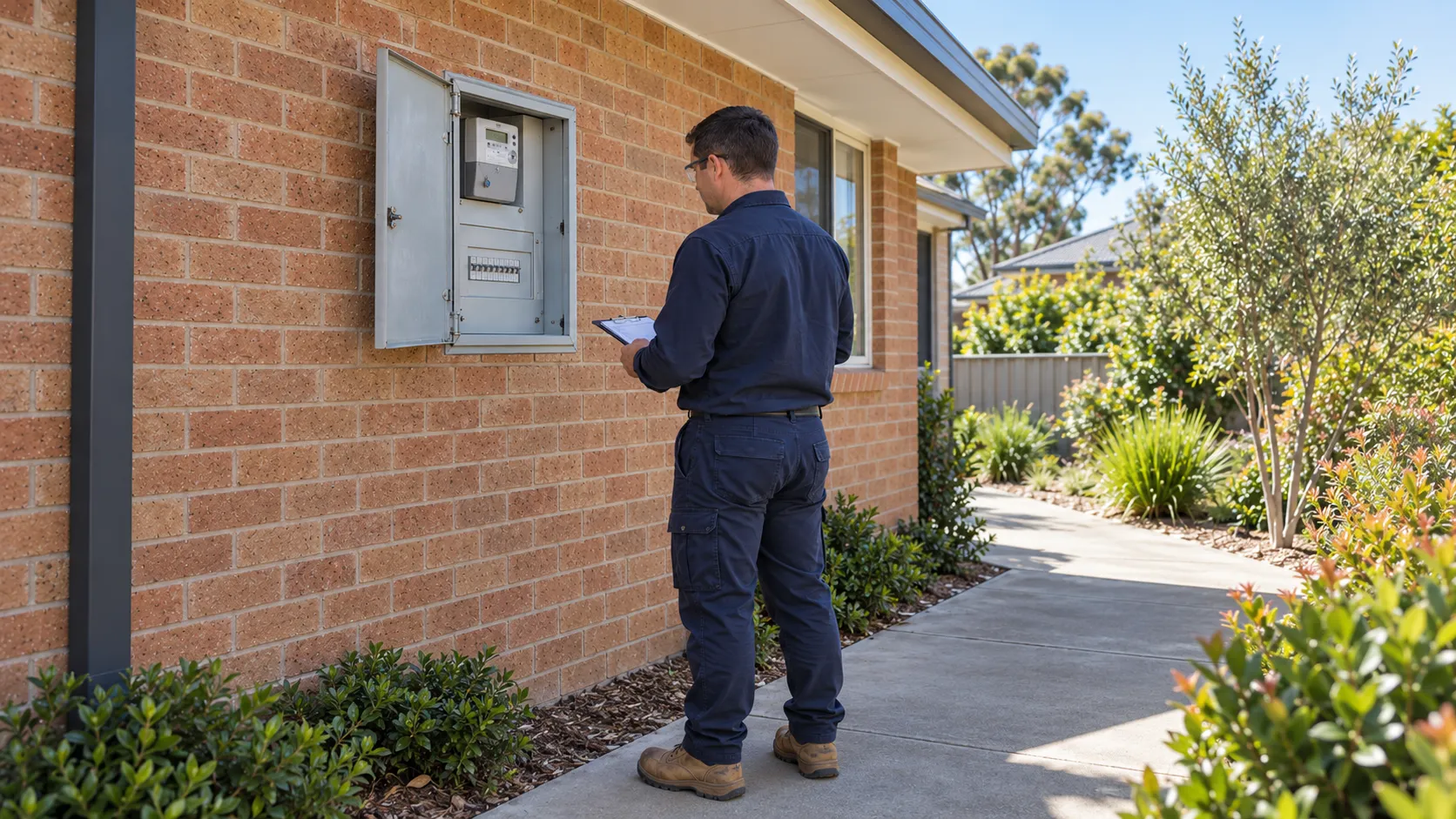
The inspection should distinguish the supply entering the property from the circuits connected through the switchboard. It should also establish whether major appliances use one phase or all three. This information helps determine which inverter arrangements may be suitable.
There is no need to open the switchboard, remove covers or inspect electrical components independently. Physical inspections and electrical testing should be left to a professional.
For an existing home, older records may not reflect subsequent electrical alterations. Ask for the confirmed supply type and any relevant connection limitations to be documented in the solar proposal. This provides a sound basis for selecting equipment and identifying any necessary electrical changes.
A three-phase connection does not automatically require a three-phase solar inverter or a larger panel array. The appropriate arrangement depends on the proposed system capacity, connection requirements, phase imbalance limits and existing electrical equipment.
The Australian Government’s guide to single-phase and three-phase inverters explains the options available for properties with a three-phase electricity supply.
A solar inverter converts the direct current electricity generated by solar panels into alternating current for household use and export to the grid. The way the inverter connects to the property's electrical supply affects how that generation is delivered.
A single-phase solar inverter delivers its output to one phase. At a property with three-phase power, the solar generation is therefore connected to one of the three phases rather than directly distributed across all three.
This arrangement can be suitable for some homes, provided it meets the relevant connection requirements. The installer must consider the inverter's output, the loads and generation already present on each phase and any applicable limits on phase imbalance.
Phase imbalance refers to differences in electrical loading or generation between the phases. Some variation is normal because household appliances switch on and off throughout the day. However, the proposed solar installation must still comply with the applicable connection conditions.
A single-phase inverter may be a practical option where the proposed system is compatible with the property's supply and permitted connection capacity. The installer should explain why the arrangement is appropriate rather than relying on the fact that similar equipment has been installed elsewhere.
There is no universal capacity threshold or approval outcome that should be assumed for every property. The relevant requirements need to be checked for the specific installation.
A three-phase solar inverter connects to all three supply phases and distributes its output across them. This can help address connection requirements relating to generation imbalance, although it does not guarantee that household demand will be evenly distributed.
For example, an oven operating on one phase may draw more electricity than lighting connected to another. The inverter's output distribution and the household's electrical loading are separate considerations. Installing a three-phase inverter does not automatically redistribute existing circuits or eliminate differences in appliance demand.
A three-phase inverter also does not require three separate solar panel arrays simply because it connects to three AC phases. The panel arrangement depends on the inverter's DC inputs, voltage range and other operating limits. These requirements are separate from the number of electrical phases supplying the property.
When comparing inverter options, homeowners should ask how each arrangement meets the property's connection requirements and whether one offers a practical advantage for the proposed system. A three-phase inverter may be appropriate for certain installations, while a compliant single-phase arrangement may suit others.
Existing solar systems require additional consideration if more panels are being added. The inverter's available capacity, compatibility with the new panels and applicable connection limits should be assessed before an expansion is approved. The article on adding panels to an existing solar system provides further information about these considerations.
Solar electricity is delivered through the electrical connection used by the inverter, while the electricity metre records imports and exports according to its configuration. These processes are related, but they are not identical.
This distinction matters when a home has a single-phase inverter and appliances connected to other phases. An appliance does not necessarily need to share the inverter's phase for solar generation to affect the property's overall electricity bill. The outcome depends on the metre’s treatment of simultaneous imports and exports, along with the applicable billing arrangements.
Consider a home with a single-phase inverter generating 3 kW on phase A. At the same time, appliances on phase A use 0.5 kW, appliances on phase B use 1 kW and appliances on phase C use 0.5 kW.
On phase A, the inverter generates more electricity than the appliances on that phase consume. The remaining 2.5 kW is available for export, subject to the property's electrical conditions and any applicable export limits. Meanwhile, phases B and C draw a combined 1.5 kW from the grid in this simplified example.
The inverter has not physically delivered electricity through the home's wiring from phase A to appliances connected to phases B and C. Instead, electricity flows through each phase according to its generation, connected loads and electrical conditions.
The metre's treatment of these simultaneous flows determines how imports and exports are recorded for billing. Where the metering arrangement nets simultaneous flows across phases, the example would produce a net export of 1 kW. Where the metre records imports and exports separately by phase, the recorded result may differ.
This is why the statement that appliances on other phases cannot benefit from solar is too simplistic. It confuses the physical distribution of electricity with the way the property's electricity exchange is measured.
Homeowners should ask their installer or electricity retailer to confirm the metering arrangement rather than assume that cross-phase netting applies. The tariff and feed-in arrangements also affect the financial outcome. Netting simultaneous imports and exports is different from using electricity at night to offset electricity exported earlier in the day.
Major appliances remain important when planning a solar installation, even where the metre accounts for simultaneous imports and exports across phases. A substantial single-phase appliance can increase the current drawn on that phase, while a genuine three-phase appliance operates through a different electrical arrangement.
The installer should identify the phases supplying major household loads and consider which appliances are likely to operate simultaneously. Appliance descriptions alone are not enough because equipment with similar functions can have different electrical supply requirements.
Phase balancing involves considering the distribution of generation and electrical demand across the connection. It does not simply mean placing every large appliance on the same phase as the solar inverter. Moving circuits may have little practical benefit in some homes and may introduce other electrical considerations.
Any proposed circuit reallocation should have a clear purpose and be assessed by an electrician. For example, a change may be intended to address excessive loading on one phase rather than increase the amount of solar electricity available to the household.
Ask the installer to explain the specific issue a proposed change would resolve and whether the expected benefit justifies the work. This provides a more useful basis for decision-making than a general claim that moving circuits will make solar work better.
A suitable solar installation starts with the property's actual electrical connection, not an assumed upgrade. The design should account for the incoming supply, switchboard suitability, major household loads and the requirements governing the proposed inverter.
Experts can assess these factors when planning a solar installation. The aim is to identify a compatible system and explain which electrical changes are necessary, which are optional and which are unrelated to the proposed installation.
Having three-phase power does not automatically mean the rest of the electrical installation is ready for solar. The switchboard, existing protective equipment and available connection arrangements still need to be assessed.
The installer should determine how the inverter can connect to the supply, whether suitable electrical protection can be provided and whether the existing equipment can accommodate the proposed system. These questions cannot be answered from an electricity bill or inverter specifications alone.
Connection requirements may affect the permitted inverter arrangement, generation imbalance and export settings. The applicable conditions must be checked for the individual property rather than assumed from a neighbouring installation. Two homes with three-phase connections can have different switchboards, existing equipment and proposed system capacities.
A necessary electrical change addresses an issue that must be resolved for the installation to be connected and operated appropriately. An optional upgrade may instead relate to a separate preference or a planned change to the property. Neither should be assumed necessary simply because solar is being installed.
If the installer recommends an electrical alteration, ask what problem it addresses and how it affects the proposed system. The reason might concern switchboard suitability or connection requirements rather than a need for additional solar capacity. Work involving circuits, switchboards and protective equipment should be carried out by professionals.
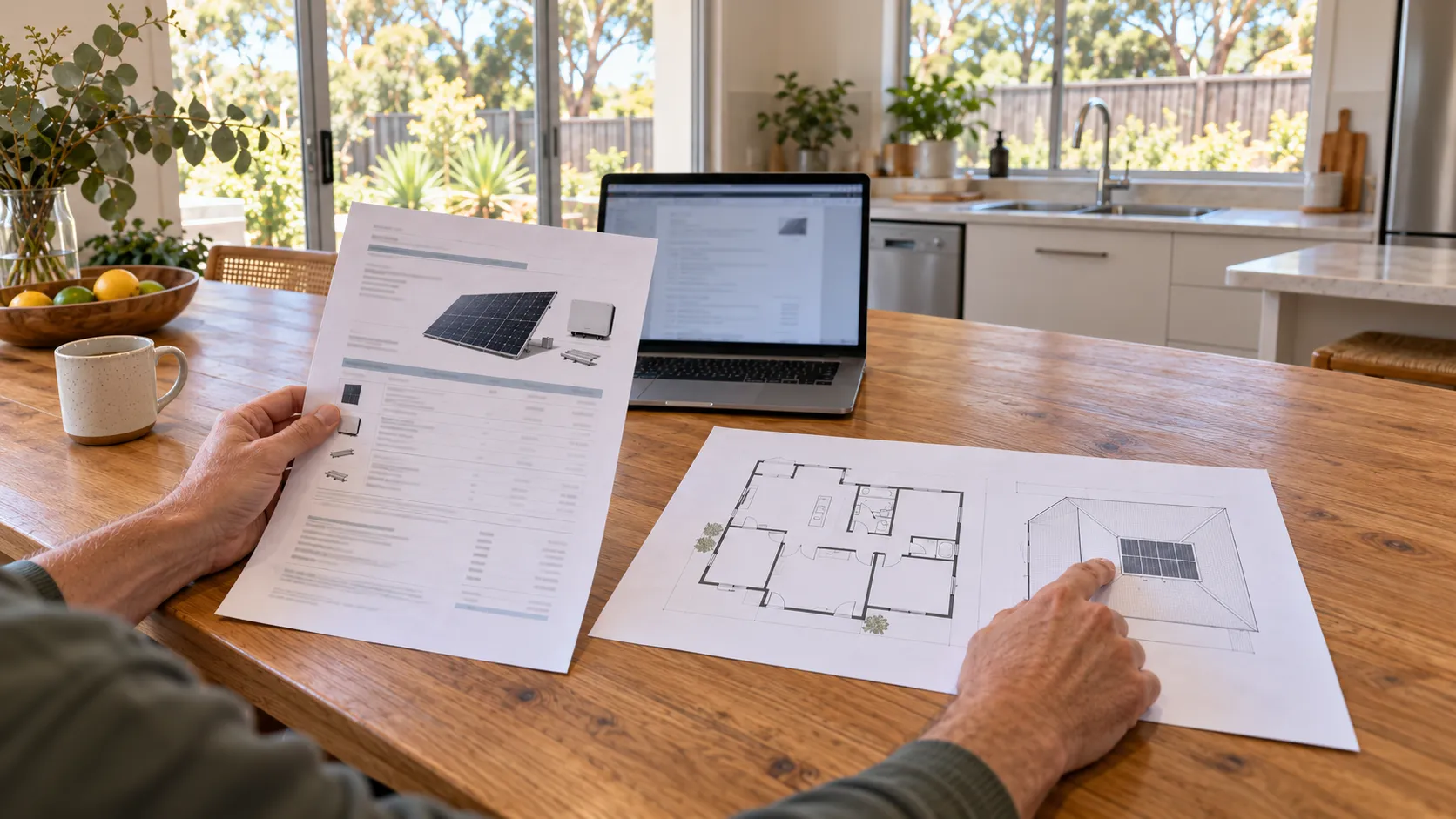
Inverter selection should reflect connection compatibility and how the household uses electricity. Existing three-phase appliances, substantial single-phase loads, the proposed solar capacity and anticipated changes in electricity demand can all influence the design.
Future flexibility is worth discussing, but recommendations should be specific. If an installer proposes a larger inverter or a specific configuration to accommodate a planned change, the proposal should explain which requirement it addresses and whether the necessary capability is included.
A larger inverter is not automatically a better investment and a three-phase inverter is not necessarily the best option for every home with a three-phase connection. The decision should be based on the property's electrical requirements, the proposed solar system and any relevant connection conditions.
Homeowners planning an installation can also review the article on planning your home solar installation for broader preparation advice. The choice of inverter and the suitability of the existing supply still need to be resolved through an assessment of the property.
When discussing solar installation in Sydney with Platinum Solar Group, ask how the proposed inverter connects to the home's supply, how the metre records simultaneous imports and exports across phases and why any recommended electrical changes are needed.
A clear explanation of these points helps homeowners compare proposals on their actual merits. The most suitable arrangement is the one that meets the property's electrical and connection requirements without assuming that three-phase power automatically calls for a particular inverter or additional electrical work.